Archives


The Christmas Eve Dinner, Gabon afaria, is a ritual considered to be the quintessential family meal. All the people at the meal are usually members of the family and the married children return to the paternal home with their respective families. Nowadays, the married couples usually alternate by celebrating Christmas Eve with one set of parents and New Year’s Eve with the parents of the other spouse. In the past, the offspring who were servants in other houses were given leave by their masters to go to the dinner, along with the gift of a salted cod to take home. Those offspring would also sometimes take a bream, along with the salted cod, to the family meal.

Homemade bread, Zeanuri (Bizkaia). Ander Manterola.
The breaking of the Christmas bread, with its rituals and beliefs, is a widespread custom in many countries of Europe, including France (pain de Noël) and Poland (opłatek). This bread, believed to have healing and calming powers, is called ogi salutadorea in Basque, which translates as “health-giving bread”. (more…)
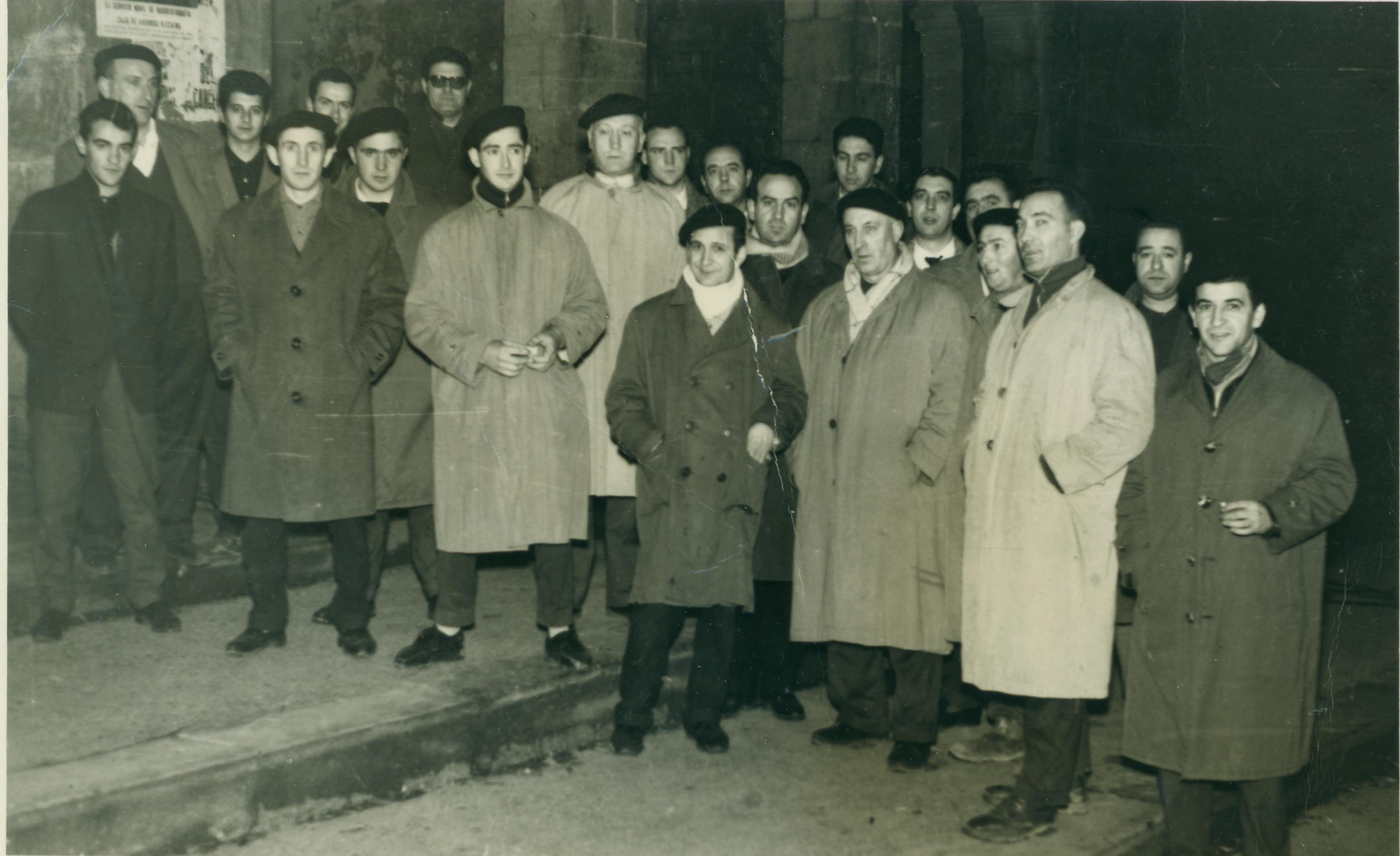
Gernika-Lumo Marijesiak, 1962. Courtesy of Segundo Oar-Arteta.
The house-visiting wassail practice is a Christmas tradition that still prevails in various localities throughout Bizkaia. Groups of children, youth or adults, sing songs to celebrate the birth of our Lord as their tour the streets and neighbourhoods and, in some cases, ask for alms. Let us describe the Marijesiak celebrations in Gernika-Lumo. The term Marijesiak (a blend of the names Maria –Mary– and Jesus) refers to the old popular stanzas as well as the singers who parade. (more…)
Bilbo-Abando
Colon de Larreategi, 14 – 2. esk.48001 Bilbo (Bizkaia)
Tel.: +34 94 443 76 84
labayru@labayru.eus
Derio
Larrauri, 1A - 5.a48160 Derio (Bizkaia)
Tel.: +34 94 406 01 71
idazkaritza@labayru.eus
Bilbo-Bolueta
Metroalde eraikinaBilbo-Galdakao errep., 6A
48004 Bilbo (Bizkaia)
Tel.: +34 94 607 72 10
labayru@labayru.eus