Archives

0

Author: Felix Mugurutza.

Bread is one of the most symbolic foods in Basque culture, for sure.

Therefore, several popular beliefs exist around it that have nothing to do with reason or religious faith, even if the latter attempted to accommodate them to its creed.

It must be said that the fact that bread was the food chosen to transubstantiate the body of Christ through the words of consecration in the Eucharist, was a great help. However, the cult of bread predates it, as converting grain is humanity’s great achievement, turning something indigestible by humans into the main food, bread.

 (more…)

0

Source: Labayru Fundazioa Photography Archive.

Since the beginning of time, fire has been the main cultural characteristic of the human species, the element which brought individuals together, and united families and societies. That is why, during the thousands of years of coexistence between fire and people, we have given fire many symbolic connotations. Let us mention them, though only briefly:

Fire and tile. In Basque culture, a permanent fire turned any common building into what we call “home” — “home”, a place of fire — a clear feature that distinguished it from huts or other temporary shelters…

 (more…)

0

Kutxa-entrega in Hondarribia (25/07/2022). Photo: E. X. Dueñas

According to the Dictionary of the Spanish language, the term “identity” has, among others, the meaning of “the set of natural characters of one individual or group, which characterizes them in comparison with others”, including the following synonyms: identification, affiliation and personality… To those, I would add two more acceptations: singularity and root (origin); without forgetting that identity also manifests itself in rivalry (healthy or unhealthy) in certain sports, celebrations, etc.

Annual festivities, and the ones celebrated during summer in particular, are filled with signs of identity and symbolic elements, general and specific; both from the material immaterial aspects. Who hasn’t heard the expressions “this is a lifelong festivity” or “this is not celebrated anywhere else”. We’ve already covered this topic in other articles from the blog.

 (more…)

0
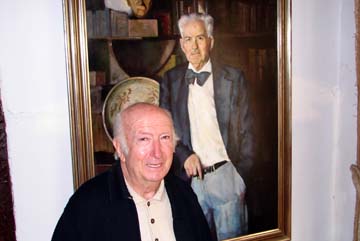
Pío Caro Baroja before a portrait of his brother Julio. Taken from Euskonews

Pío Caro Baroja before a portrait of his brother Julio. Taken from Euskonews.

It was not long ago that Pío Caro Baroja passed away in his Málaga home. Guardian of the family memory and Itzea, the property acquired by his uncle Pío in 1912, he devoted himself to documentary making. He also turned to writing and editing works of diverse nature. (more…)