Archives

Iker Ugalde. Labayru Fundazioa Photographic Archive.
It is grape harvest time in the Basque Country. Txakolin wine producers sample their grapes to check acidity levels, sugar content, and three or four other parameters, in search of optimal fruit maturity.
Home winemaking was once customary in our country. Most farmhouses would keep some vines, on orchard and field margins, typically, or in rows between cultivated fields, to make the so-called txakolina — a slightly sparkling, dry white wine— for their own consumption. A quarter of a century ago there would be just over a dozen hectares of vineyards in Bizkaia; today there are more than four hundred. (more…)
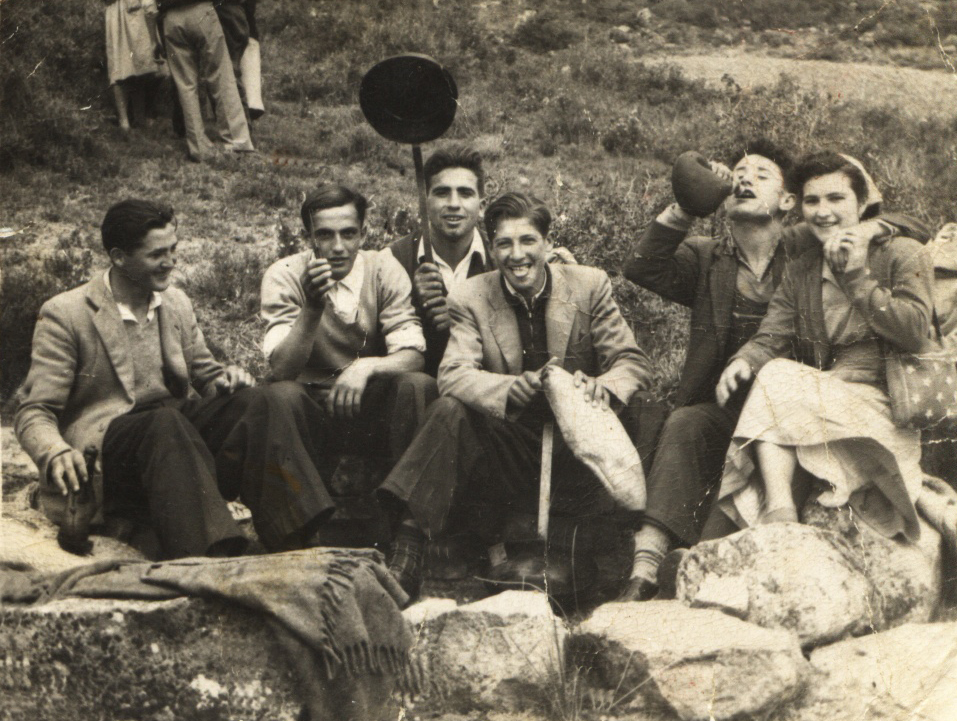
Wine was the perfect festival drink. San Martín de Unx, c. 1960.
Wine has likewise had important uses both in popular medicine and family diet.
Within the daily therapeutics of yesteryear’s Navarrese society, so far removed from medicines and drugs, wine and its derivatives helped in combating numerous diseases. Compresses of vinegar and salt served as a remedy for sprains in Améscoa and insect bites in San Martín de Unx. Vinegar being considered an efficient wound disinfectant, a good rub of it would fight ringworm in Izurdiaga, chilblains in Larraga, and even rabid dog bites in other localities. Vinegar patches to minimise the effects of cold sore outbreaks was another common use. (more…)
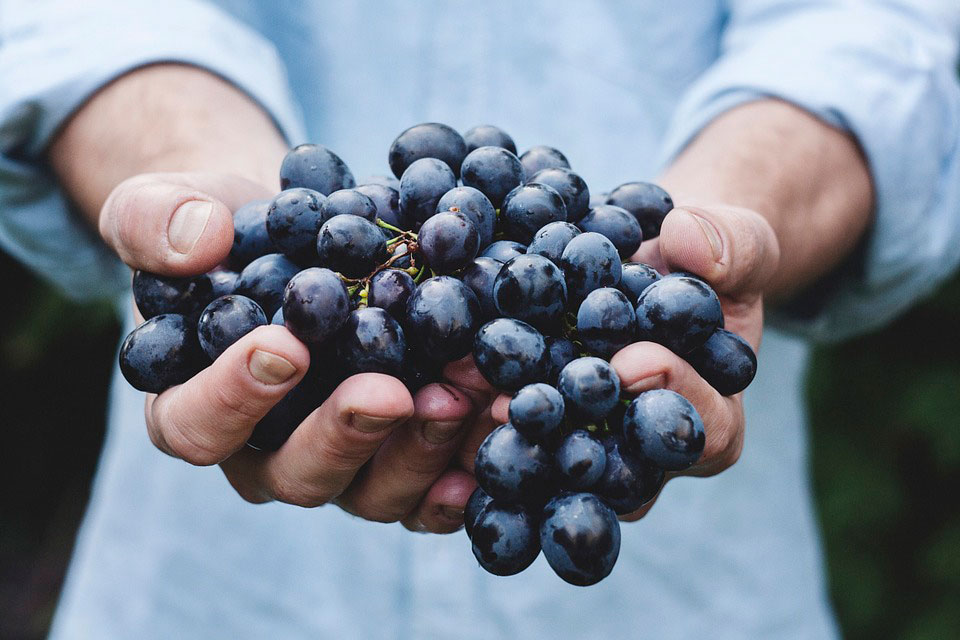
Wine grapes. www.pixabay.com.
In the traditional Navarrese society where scarcity forced the appropriate use of the existing resources, wine proved extremely valuable in a wide variety of ways. It had above all a stimulating effect on the daily life of a people subjected to the pressures of physical labour. Field workers, for instance, never tasted water and enjoyed instead the benefits of wine. On a hot, sunny day of August in the fields of Nekeas in Obanos, the word is out, somebody had no choice but to drink water from a source, for his wineskin was empty, and ended up… with an upset stomach.
Now that it is grape harvest time we shall remember the diverse uses of wine in its multiple forms. (more…)
Bilbo-Abando
Colon de Larreategi, 14 – 2. esk.48001 Bilbo (Bizkaia)
Tel.: +34 94 443 76 84
labayru@labayru.eus
Derio
Larrauri, 1A - 5.a48160 Derio (Bizkaia)
Tel.: +34 94 406 01 71
idazkaritza@labayru.eus
Bilbo-Bolueta
Metroalde eraikinaBilbo-Galdakao errep., 6A
48004 Bilbo (Bizkaia)
Tel.: +34 94 607 72 10
labayru@labayru.eus